Guide · Updated September 2026 · 12 min read
How long does it take to charge a Tesla Model 3?
Real-world charging times by charger type, trim and conditions. Everything you need to know before buying or for day-to-day use.
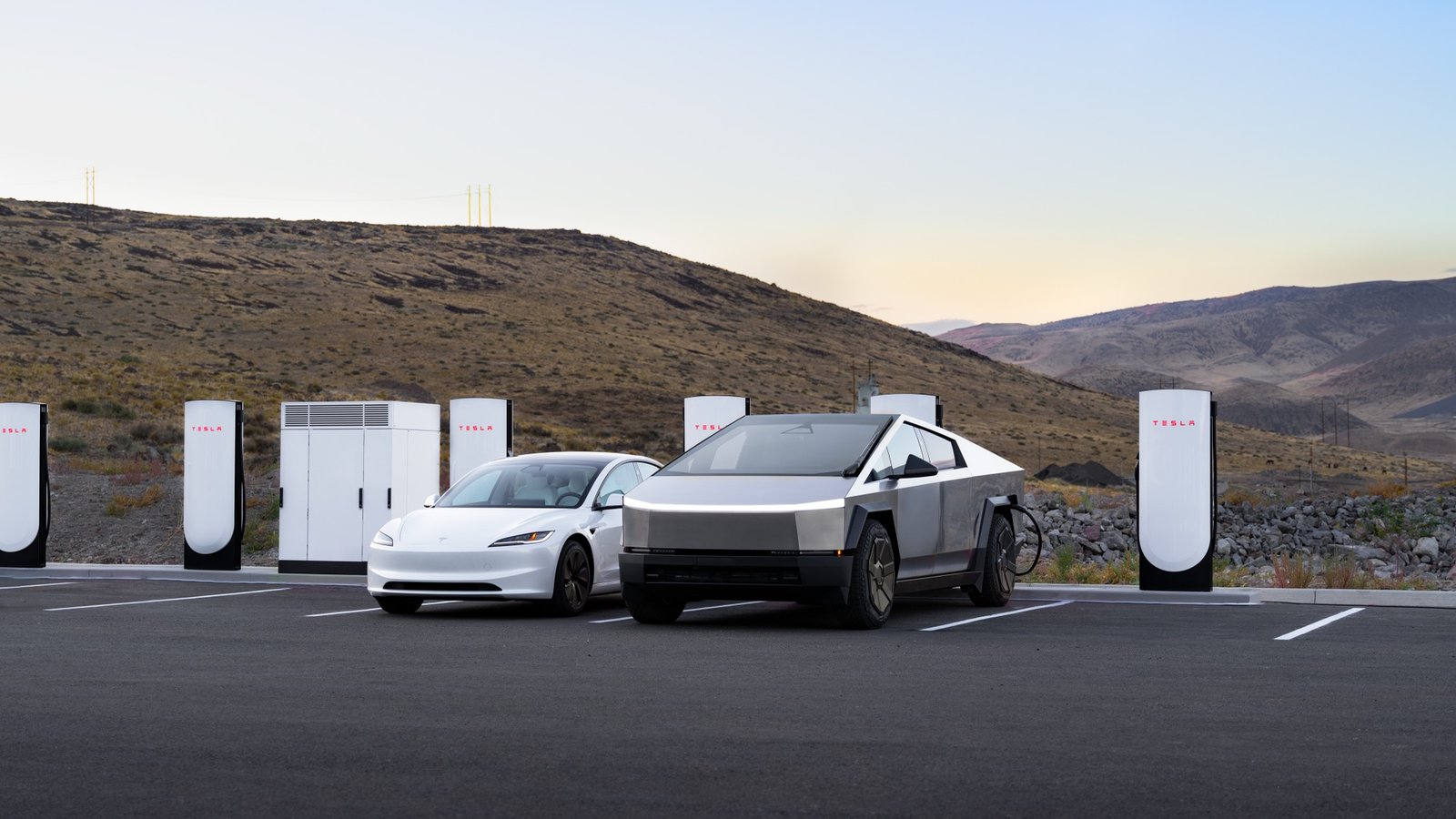
There isn’t a single answer to how long it takes to charge a Tesla Model 3. It depends on four variables: the trim, the type of charger, the starting battery level, and ambient conditions. This guide cuts through the myths with real-world figures and tells you exactly what to expect in each situation.
1. The quick answer: times by scenario
Before the details, here are the most useful ballpark figures for most owners. Scenarios are ordered from most to least common.
- Supercharger stop on a long trip15 minutes on a V3/V4 Supercharger · official Tesla figure170 milesof range added in 15 min
- Full overnight charge with an 11 kW Wall Connector20% to 100% · Model 3 Rear-Wheel Drive~6 hno alarms needed
- Full overnight charge with an 11 kW Wall Connector20% to 100% · Model 3 Long Range~9 hready by morning
- Public 22 kW AC charge pointCapped by the car at 11 kW · all trims~7–10 hdepends on trim and starting level
- Household outlet (2.3 kW)Full 0–100% charge · emergencies only36–45 hnot recommended for daily use
Charging times rarely go from 0% to 100%. In practice, most Model 3 owners charge between 20% and 80% day to day, and only go to 100% before a long trip — or daily on the Rear-Wheel Drive trim, whose LFP battery chemistry allows and even recommends it. That 20–80% range is what matters for real-world use.
2. Charging speed by Model 3 trim
The Tesla Model 3 is sold in four trims. Each has a different maximum charging power, which determines how long it takes to charge.
Entry
Rear-Wheel Drive
Longest range
Long Range Rear-Wheel Drive
Long range AWD
Long Range All-Wheel Drive
Performance
Performance All-Wheel Drive
Source: Tesla, official specifications (WLTP figures shown; EPA range differs by market).
The number that matters most is peak DC charging power: 250 kW on the Long Range and Performance trims, versus 170 kW on the Rear-Wheel Drive. On a V3 or V4 Supercharger, the Rear-Wheel Drive doesn’t use all the power on offer — but in the practical 20–80% range, the real-world difference is only about 5–8 minutes.
3. Supercharger charging: V3 and V4
Superchargers are the fastest way to charge a Tesla Model 3. Tesla’s global Supercharger network is one of the largest fast-charging networks in the world, with excellent motorway and city coverage in most markets.
Tesla’s official figure is clear: up to 170 miles of range added in just 15 minutes on a V3 or V4 Supercharger. That figure applies to the 250 kW DC trims under optimal battery-temperature conditions.
V3 vs V4
V4 Superchargers have a peak power of up to 250 kW per stall, same as V3, but each stall has its own dedicated power cabin, which reduces the power-sharing degradation you can get on V3 when two neighbouring stalls are both in use. In practice, the charging experience is very similar between the two versions when the station isn’t busy.
Plan charging stops between 10% and 80%. That’s the range where the battery charges fastest. Going from 80% to 100% can take almost as long as 10% to 80%. Tesla’s trip planner handles this automatically.
The charging curve: why the first minutes matter most
The Model 3 Long Range hits 250 kW only during an initial window — typically while the battery is below 25–30%. From there, power tapers off progressively. At 50% charge, speed usually sits around 120–140 kW. By 80%, it has already dropped to 60–80 kW. Two short stops (10% to 50%) are always faster overall than one long stop up to 90%.
Battery preconditioning
When you set a Supercharger as your destination in the Model 3’s own navigation, the car automatically triggers battery preconditioning: it brings the cells up to their optimal temperature before you arrive. This can make a 5–15 minute difference in total charging time. Always navigate to the Supercharger from the car itself — not from your phone — so preconditioning kicks in.
4. Public DC fast chargers
Since late 2023, the Tesla Model 3 has come with a native CCS Combo connector, the DC fast-charging standard across Europe and increasingly elsewhere. You can charge on any public network without an adapter.
| Network / charge point | Typical power | Real speed on Long Range | Approx. time 20→80% |
|---|---|---|---|
| Motorway ultra-fast networks (e.g. Ionity) | 350 kW stall | ~200–250 kW (capped by the car) | ~25–32 min |
| Supercharger V3/V4 | 250 kW stall | ~200–250 kW | ~25–30 min |
| Mid-power public DC (50–150 kW) | 50–150 kW | 50–150 kW | ~30–60 min |
| Fast public DC on A-roads (~150 kW) | 150 kW | ~130–150 kW | ~32–40 min |
| Municipal DC charge points | 22–50 kW | 22–50 kW | ~60–120 min |
Speeds drawn from user-reported charging sessions. Actual power depends on battery temperature, state of charge and whether neighbouring stalls are in use.
The Model 3 doesn’t trigger automatic preconditioning when you navigate to a non-Supercharger charge point. You can turn it on manually from the car’s charging menu before you set off — especially useful on cold days.
5. Home charging with a Tesla Wall Connector
For most Model 3 owners, home charging with a Tesla Wall Connector is the day-to-day solution. It’s convenient, cheap — especially on an off-peak tariff or with solar — and enough to replace the miles used each day while you sleep.
The Tesla Model 3 accepts up to 11 kW three-phase AC on every trim. Even where 22 kW charge points exist, the car itself can’t use more than 11 kW. The Tesla Wall Connector is the most efficient, best-integrated option for home charging.
| AC charger type | Power | Rear-Wheel Drive | Long Range / Performance |
|---|---|---|---|
| Tesla Wall Connector 11 kW (three-phase) | 11 kW | ~6 h (0→100%) | ~8–9 h (0→100%) |
| Single-phase AC charger 7.4 kW | 7.4 kW | ~8.5 h (0→100%) | ~11–12 h (0→100%) |
| Public 22 kW AC charge point | 11 kW (capped by the car) | ~6 h (0→100%) | ~8–9 h (0→100%) |
| Household outlet 2.3 kW | 2.3 kW | ~28 h (0→100%) | ~38–45 h (0→100%) |
Times assume ~90% charging efficiency and can vary slightly in practice.
Daily use is far more forgiving: if you drive 30–50 miles a day, replacing that with a Tesla Wall Connector takes only 1.5 to 2.5 hours.
As an illustration using Spanish electricity prices: on a €0.08–0.10/kWh night tariff, a full charge of a Model 3 Long Range from 0% costs roughly €6–9. At off-peak rates, the cost per mile works out to a small fraction of an equivalent petrol car — electricity prices vary a lot by country, so treat this as a reference rather than your own number.
6. Household outlet: when it makes sense
Tesla’s Mobile Connector lets you charge from any standard household outlet. It’s the emergency solution Tesla includes (or offers as an accessory, depending on the trim), and it has real value when there’s no other option.
From a standard 230V/10A outlet (2.3 kW), charging speed is roughly 9–10 miles of range per hour. With a higher-amperage outlet (230V/16A, ~3.7 kW) and the right adapter, you can reach 14–16 miles per hour.
It’s not a daily solution: it’s slow, household outlets aren’t built for continuous 8–10 hour loads, and the cost per kWh is usually higher than an off-peak home tariff. Use it for emergencies or the occasional top-up, never as your main method.
7. What affects real-world charging speed
Official figures are a best-case reference. In the real world, several factors can slow charging down significantly:
| Factor | Impact | Fix |
|---|---|---|
| Cold battery (<50°F / 10°C) | Up to 40% slower | Trigger preconditioning before arriving |
| Hot battery (>104°F / 40°C) | 10–20% slower | Park in the shade; the car manages cooling |
| Shared power at older stalls | Up to 50% slower on older hardware | Pick a stall without a neighbour where possible; minimal impact on V3/V4 |
| High starting charge (>50%) | Power is already tapering off from the start | Plan shorter, more frequent stops |
| Accessories running while charging | Minor; climate control draws ~1–2 kW | Turn off climate control if you need maximum speed |
8. Tips to charge faster and protect the battery
These habits make the difference between an efficient charging routine and a frustrating one:
- 01Always navigate to the Supercharger from the car itselfAutomatic preconditioning can save you 5–15 minutes on cold days. Enter the Supercharger into the car’s own navigation, not your phone, so the system triggers it.
- 02Your daily charge limit depends on your trimThe Rear-Wheel Drive uses an LFP battery: Tesla recommends charging it to 100% regularly, since this chemistry isn’t penalised by frequent full charges. On Long Range and Performance trims, charge to 80% for daily use and save 100% for long trips.
- 03Take advantage of an off-peak electricity tariffSchedule your charging start time from the Tesla app for the cheapest hours (typically overnight). You can cut the cost of each charge substantially compared with a flat-rate tariff.
- 04On long trips, arrive at 10–20% and leave at 70–80%That’s the most efficient range on a Supercharger. Avoid arriving at 0% and don’t wait for 100%. Tesla’s trip planner works this out automatically.
- 05Install a Tesla Wall Connector if you have off-street parkingThe investment pays for itself quickly and lets you charge every night comfortably at the lowest possible cost. See our guide on the Wall Connector, installation and price in Spain (in Spanish).
Frequently asked questions about Tesla Model 3 charging
How long does it take to charge a Tesla Model 3 at a Supercharger?
According to Tesla’s official figures, the Model 3 can recover up to 170 miles of range in just 15 minutes on a V3 or V4 Supercharger. That figure applies to the Long Range and Performance trims (250 kW DC) under ideal conditions. A full 0–100% charge takes 60–75 minutes, though for long trips it’s typical to charge from 10% to 80% in around 25–30 minutes and get back on the road.
How long does it take to charge the Model 3 at home on a normal outlet?
From a standard household outlet (2.3 kW), a full charge of the Rear-Wheel Drive Model 3 from 0% can take 28–36 hours, and 38–45 hours on the Long Range trims. This isn’t the recommended method for daily use — it’s strictly an emergency backup.
Is it worth installing a Tesla Wall Connector at home?
Yes, it’s the most recommended option for home charging. An 11 kW three-phase Tesla Wall Connector charges the Rear-Wheel Drive Model 3 in about 6 hours, and the Long Range trims in about 8–9 hours. The investment, including installation, typically pays back quickly through the savings on daily charging.
Can the Tesla Model 3 charge at any public charge point?
Yes. The Tesla Model 3 (from late 2023 onward) comes with a native CCS Combo connector, the DC fast-charging standard used across Europe and increasingly worldwide. You can plug in at any public DC network without an adapter. For AC charging it uses the standard Type 2 connector in Europe.
Why does charging slow down after 80%?
This is normal behaviour for any lithium-ion battery. The battery management system progressively reduces charging power as the battery approaches 100% to protect the cells. From 0% to 80% charging is fast; from 80% to 100% can take almost as long as the first 80 points. The Rear-Wheel Drive’s LFP battery can be charged to 100% regularly without this being an issue.
Which Model 3 trim charges fastest on DC?
The Long Range Rear-Wheel Drive, Long Range All-Wheel Drive and Performance trims all accept up to 250 kW of peak DC power. The Rear-Wheel Drive is capped at 170 kW, though the real-world difference in the practical 20–80% range is only about 5–8 minutes.
Does temperature affect Tesla Model 3 charging speed?
Yes, significantly. Below 50°F (10°C) the battery needs to be warmed up beforehand. The Tesla Model 3 automatically triggers preconditioning when you navigate to a Supercharger from the car itself. Without preconditioning in freezing temperatures, charging times can increase by 20–40%.
How much does it cost to charge a Tesla Model 3 at a Supercharger?
Pricing varies by country, region and even by individual station, so always check the exact rate in the Tesla app before charging. Superchargers are best suited to trips; home charging is the more economical option for everyday use — see the figures for Spain in this guide as one reference point.
How much would you save charging at home vs. filling up with petrol?
Try the savings calculator →Our calculator currently runs on Spanish fuel and electricity prices (€) — still a useful way to see the scale of the saving.